productronica is the world’s leading trade fair for electronics development and production. For companies across the electronics manufacturing value chain, from PCB production and semiconductor manufacturing to automation, soldering and inspection technology, it is the definitive event of its cycle.
The 2027 edition runs 16 to 19 November 2027 at Messe München, drawing more than 1,600 exhibitors and around 47,000 highly qualified visitors, of whom the great majority hold purchasing or decision-making authority.
Exhibiting at productronica requires a technical sell and this guide takes in what a stand costs as well as how the fair’s engineering focus shapes the build. It also covers the operational realities that electronics-production exhibitors have to plan around.
Why productronica is a decision-maker’s fair
This gives exhibitors unusual efficiency since the people working the stand are the actual buyers, not gatekeepers or students. Stand design must account for the fact that every serious conversation may lead directly to a sale and what sets productronica apart is the seniority and buying authority of its attendees and about nine in ten visitors engage in purchasing decisions because decision-makers concentrate so heavily.
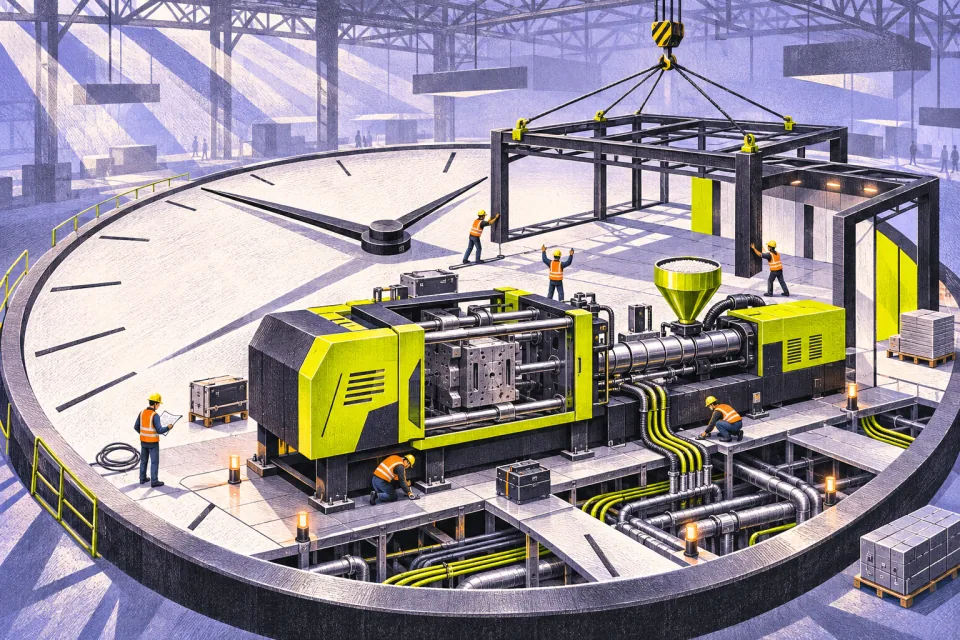
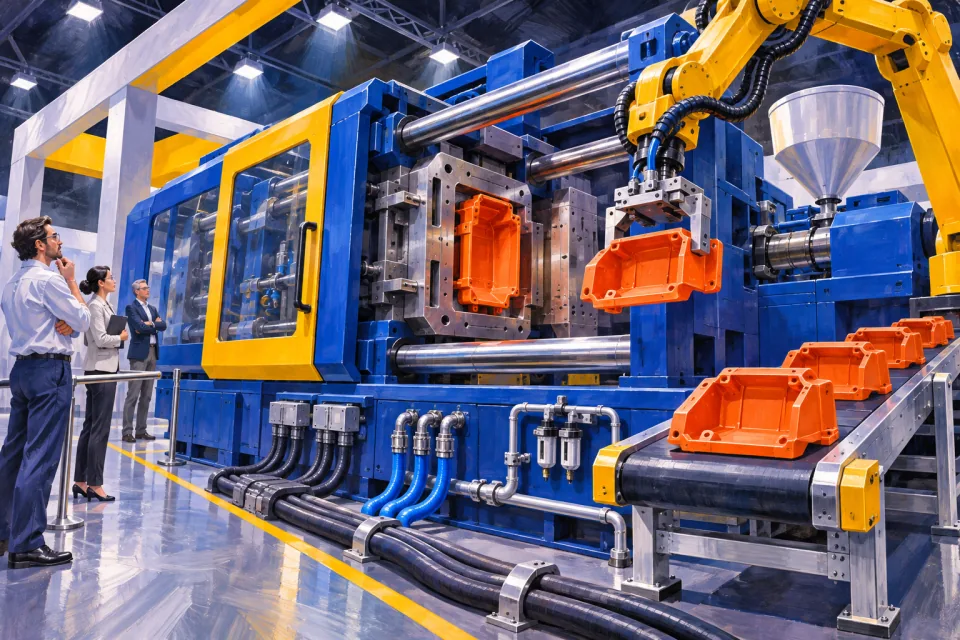
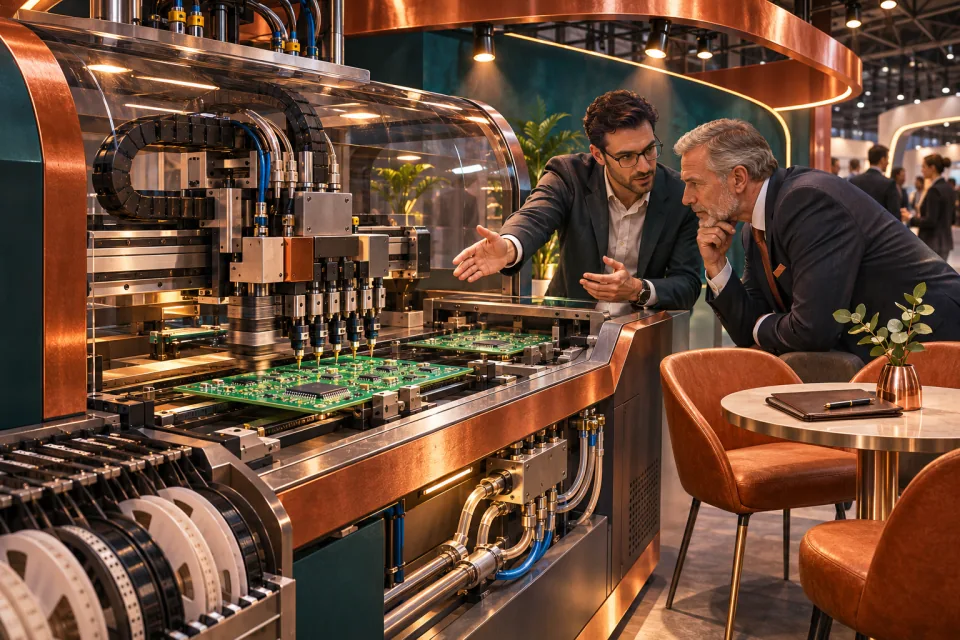
The fair covers the entire electronics production value chain, so exhibitors range from machine builders demonstrating placement and soldering equipment to materials, software and services vendors. Many exhibit working equipment, placement machines, soldering systems, inspection and test technology, running live, which brings the same power, services and floor-load requirements as any machinery fair.
Other stands show software and services with the stand as a place for demonstration and meetings. What they have in common is a technical audience that wants to see capability proved rather than described.
Industry perspective: At productronica the person you are talking to can sign the order. That is rare and valuable, and it should shape the stand. Build for serious, qualified technical conversations that can convert on the spot, not for casual footfall, because the footfall here is unusually qualified to begin with.
As a result, productronica gives more reward to stands that are built for depth of engagement rather than breadth of exposure. A stand that can hold detailed technical talks, show equipment convincingly and push a decision-maker towards a purchase does better than one optimised for passersby.
The venue: exhibiting at Messe München
One of the world’s leading fairgrounds, Messe München hosts productronica. The show takes place there in 18 halls over about 200,000 square metres of indoor space. Its sister electronics fair electronica runs in the same November slot each year and alternates years with productronica.
Our Messe München venue guide covers the halls, logistics and forwarder arrangements in detail, and our Munich exhibitor guide covers the wider practicalities of exhibiting in the city, from accommodation to builder selection.
Strong transport links serve the venue well. Production machinery brought by exhibitors calls for the electrical and services needs to be confirmed early. Productronica exhibitors see their footfall depend on where the hall is relative to the fair’s technology clusters. Standards covering German demands on floor loading, power and rigging along with a managed hall and dock schedule make up the practical venue points.
Munich being an expensive accommodation market and the November electronics fairs drawing many visitors mean hotels close to the grounds book up fast so our Munich guide goes into this detail extensively.
What a productronica stand costs in 2027
Whether an exhibitor shows live production machinery or displays technology and services shapes how much productronica stand costs but most stands sit in the standard-to-premium custom range.
The figures below reflect the European per-square-metre build benchmark we maintain across contractors, expressed as the stand build cost before space rental, and are consistent with the ranges in our Europe stand cost matrix.
| Stand tier | Typical use at productronica | Indicative build cost (EUR per sqm) |
|---|---|---|
| Standard custom | Component, materials and software vendors | 600 to 1,100 |
| Premium custom | Machine builders with live equipment | 1,100 to 1,800 |
| Flagship custom | Major equipment makers, multi-storey stands | 1,800 to 2,500+ |
Exhibitors running live production equipment carry the heavier cost drivers: the electrical supply, compressed air and services that placement and soldering machines require, plus the freight and positioning of the equipment. Exhibitors presenting software and services carry lighter services costs but often invest more in demonstration technology, meeting space and finish. Budgeting for productronica means budgeting for the specific demonstration the stand needs to deliver.
| Line item | What drives it at productronica |
|---|---|
| Space rental | Charged per sqm by the organiser |
| Electrical and services | Live production equipment draws continuous load |
| Machine freight and positioning | Placement, soldering and inspection systems |
| Demonstration technology | Screens, interactive displays, running lines |
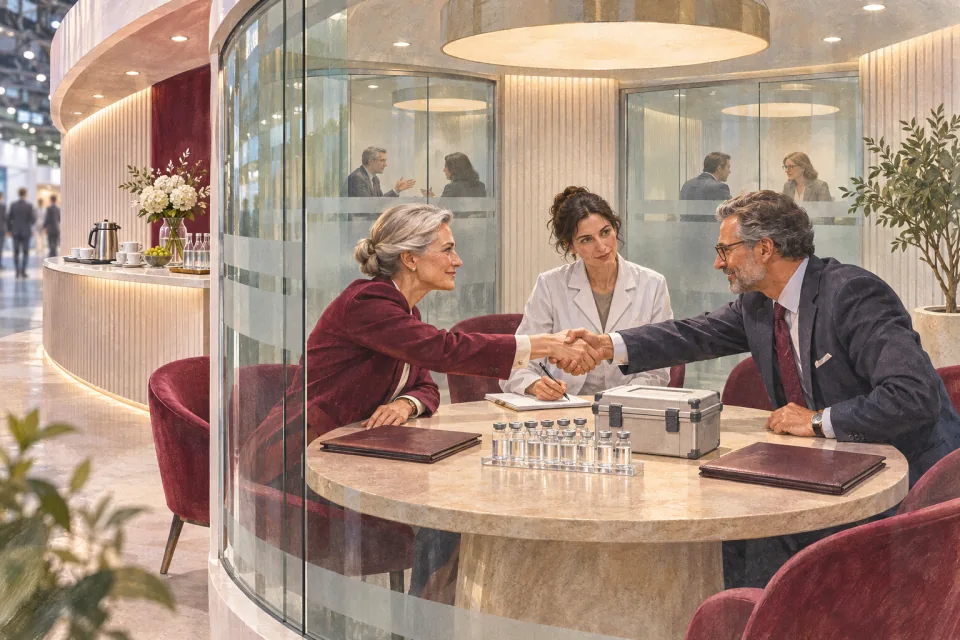
| Meeting space | Decision-maker conversations need private space |
| Staffing and travel | Technical staff plus Munich accommodation costs |
Industry perspective: The productronica stand that wins is the one that lets a qualified decision-maker see the technology work and then sit down to talk terms in the same visit. Demonstration plus meeting capacity, in that order, is what converts this fair’s unusually senior audience into orders.
Exhibitors considering their investment find that productronica’s concentration of decision-makers makes it possible for the cost per genuine buying conversation to be lower than at a wider fair even though total spend is higher, because so little of the audience is unqualified. How to model that return appears in our exhibition budget framework.
Freight and temporary import for production equipment
The same freight rules apply to productronica exhibitors showing production machinery as to any machinery fair. Placement machines, soldering systems and inspection equipment are valuable and precise and moving them to Munich to be positioned and commissioned before the fair opens is a big job. Exhibitors coming from outside the customs union need to plan carefully for temporary imports. Equipment that clears customs late cannot be commissioned in time.
Per-country fees are covered in our ATA Carnet cost guide. Our customs decision matrix goes through what route is right for shipping equipment.
Treating equipment freight and commissioning as the critical path is the practical rule. A placement or soldering demo that does not run on the first morning fails in front of precisely the decision-makers the fair is there to reach.
Choosing a productronica builder
Because coordinating precision production equipment, services and demonstration technology is specialist work, the case for a builder that has worked with Messe München and on electronics fairs is a strong one. When a contractor grasps the electrical and services needs, the floor-load rules and the rules on approved contractors at the venue, risk drops on a project that is technically demanding.
Our Munich exhibitor guide covers builder selection for the venue in detail.
In Munich and the wider southern-German region there is a deep pool of experienced technical stand builders. Exhibitors can begin with our verified builder directory and our Germany regional guide. What separates a smooth build from an expensive one is matching the builder to the demo requirement, whether that is live production equipment or a technology-and-meeting setup.
Staffing for a senior technical audience
When staffing productronica, the fair’s decision-maker profile either pays off or goes to waste. Senior and technical visitors call for stand staff able to have both a peer-level talk about the technology. A commercial talk about terms, often with the same person in the same visit. The stand needs to match the seniority and technical depth of its visitors or it underdelivers exactly because the audience is so qualified.
That calls for bringing real technical and product experts to the stand with support from commercial staff who can drive deals, instead of counting on a sales team that goes nowhere on engineering. The travel and staffing costs are higher, in particular because of how much Munich accommodation costs. At a fair where people can buy on the spot, a thin or shallow staff lets the opportunity slip.
Our stand staffing guide covers the technical-to-commercial ratio.
Measuring return at a decision-maker fair
Decision-makers draw to Productronica and its metrics should follow the quality and momentum of buying talks rather than raw traffic alone. A productronica campaign succeeds by any visitor count when forty serious conversations with qualified buyers happen, some moving toward orders and whatever counts is qualified pipeline and the value of eventual orders.
Each conversation should be captured for what technology the buyer was evaluating, for what production line and on what timeline. That makes follow-up precise and useful. Real value and set cycles exist in electronics-equipment sales so how well the follow-up after the fair goes affects the return a great deal.
Getting the measurement goal defined before the fair and instrumenting the stand to capture it turns a technical stand into an accountable investment. The attribution method is covered in our wider exhibition strategy guides.
Planning around the electronica alternation
Messe München runs productronica and electronica as sister fairs in the same November window and they alternate each year. Electronica takes in electronic components and systems and productronica takes in the production and development of electronics. Companies from across the electronics ecosystem show up at both fairs over the two-year cycle and it helps planning to grasp how the alternation works.
Exhibitors attending both fairs get a real efficiency gain. The venues are the same and the supplier pools overlap. That venue knowledge, contractor relationships that have been approved and freight arrangements can carry over the two fairs as well as even reusable stand parts.
Instead of handling them as separate projects two years apart, a company that combines its electronica and productronica strategies cuts costs and eases efforts on both fronts. Stand strategy, builder relationships and logistics approaches stay largely transferable between the two shows and approaching them as one two-year program rather than two separate events is the more efficient way.
Industry perspective: If you exhibit at both electronica and productronica, plan them as one programme, not two. Same venue, same city, overlapping suppliers, transferable stand components. The companies that treat each as a fresh start every two years are repeating work and cost they could have amortised across the cycle.
Sustainability and stand reuse
Sustainability is increasingly part of the electronics-industry conversation, both in the products on show and in how companies exhibit, and Messe München’s own modern, efficient grounds reflect the direction of travel. For an exhibitor, the most material sustainability lever is stand reuse, and the electronics fairs are well suited to it because so many exhibitors return edition after edition.
Compared with a series of one-off custom builds, a reusable modular or hybrid system that gets spread across productronica, electronica and other technical fairs saves both money and embodied carbon. The expensive and stable part is the demonstration infrastructure that includes benches, powered display spaces and meeting rooms and this lends itself to standardisation. What gets refreshed is the presentation layer.
For an electronics company with sustainability reporting obligations, this is one of the clearer places where the environmental and economic cases point the same way. The two-fair Munich cycle makes the reuse economics especially favourable.
The operational timeline
Through summer and autumn, design, contracting and equipment logistics continue as productronica in mid-November takes up builder capacity that otherwise would be competing with busy end-of-year European fair seasons.
A realistic countdown for a technical stand runs from confirming space roughly nine to twelve months out, through locked design and confirmed equipment services at six months, to demonstration content, graphics and staffing at three months and installation, equipment commissioning and testing during build-up week.
Of all steps, the commissioning step most affects how the stand performs and gets compressed most often under deadline pressure. Production-equipment demonstrations that are still being set up on the morning the fair opens fail in front of the senior audience present at the fair. Giving a full commissioning and test window before doors open is not optional.
The shipping timeline guide goes into more detail on the countdown and at a technical fair such as productronica the rule is that the equipment has to be proven working before the first visitor gets there.
Early booking is important too for the Munich accommodation constraint. Large crowds come to the November electronics fairs and the hotel market is already expensive so the exhibitor team must secure its accommodation well ahead. When a team is based far from the grounds, the daily commute is long and that eats into energy during a tough technical fair. As with the stand and equipment logistics, accommodation gets planned at the same early stage.
Getting the demonstration right
Because productronica is demonstration-driven, the quality of the demonstration counts for more than the size of the stand. A well-conceived demonstration that clearly shows a machine’s speed, precision or capability advantage does more to convince a decision-maker than a large stand with a vague running line.
Exhibitors that work most effectively build the demo around the particular decision the buyer is making. Cycle time, placement accuracy, changeover speed, energy use all go into that and the advantage gets shown and measured on the stand.
Content, engineering and stand design all go into this task equally and it works best when planned early with the physical build instead of being added at the end. When an exhibitor shows up with a great stand but a demonstration that is either unconvincing or badly staged, the budget has been misused. At productronica the demo is the sales pitch.
Getting a specialist to design the demonstration to answer the buyer’s actual question is one of the highest-return decisions an exhibitor can make at this fair.
The bottom line for productronica exhibitors
productronica rewards exhibitors who plan for its unusually senior, technical and purchase-ready audience. The stand should be built for demonstration and serious conversation, the machinery services and freight should be treated as the critical path where live equipment is involved. The staffing should match the seniority of the visitors.
Exhibitors who choose a builder with Messe München and electronics-fair experience, plan the equipment logistics early and book Munich accommodation ahead treat productronica as one of the most efficient selling weeks in the electronics-production calendar. Few other fairs put this density of decision-makers in front of an exhibitor.
Exhibitors that get the most out of productronica are those who understand its audience is small in number but exceptional in quality and they build, staff and demonstrate accordingly. Decision-makers at a fair reward depth over spectacle. The stand that converts is the one designed to have serious talks ending in orders, delivered by people who can show the technology and close the deal.
Exhibitors can look at our fair-participation guides to compare productronica against their wider strategy. Companies that want to source a Munich stand builder can begin with the verified builder directory.
FAQFrequently asked questions
The 2027 edition runs 16 to 19 November 2027 at Messe München. It draws more than 1,600 exhibitors and around 47,000 highly qualified visitors, of whom the great majority hold purchasing or decision-making authority. The fair covers the entire electronics production value chain, from PCB production and semiconductor manufacturing to automation, soldering and inspection technology.
Standard custom stands, used by component, materials and software vendors, run 600 to 1,100 EUR per sqm. Premium custom builds for machine builders with live equipment run 1,100 to 1,800 EUR per sqm. Flagship custom stands for major equipment makers and multi-storey builds start at 1,800 to 2,500 EUR per sqm. These are build costs before space rental.
Exhibitors running live production equipment carry the heavier cost drivers: the electrical supply, compressed air and services that placement and soldering machines require, plus the freight and positioning of the equipment. Exhibitors presenting software and services carry lighter services costs but often invest more in demonstration technology, meeting space and finish.
About nine in ten visitors engage in purchasing decisions, so the people working the stand are the actual buyers rather than gatekeepers or students. That seniority and buying authority is what sets the fair apart. It gives exhibitors unusual efficiency, because every serious conversation on the stand may lead directly to a sale.
Messe München is one of the world’s leading fairgrounds, offering around 200,000 square metres of indoor space across 18 halls. Practical venue points include demanding German requirements on floor loading, power and rigging, plus a managed hall and dock schedule. Hall placement relative to the fair’s technology clusters affects footfall.
A realistic countdown for a technical stand runs from confirming space roughly nine to twelve months out, through locked design and confirmed equipment services at six months, to demonstration content, graphics and staffing at three months. Installation, equipment commissioning and testing then happen during build-up week. Design, contracting and equipment logistics extend through summer and autumn.
Commissioning. It most affects how the stand performs and is the step most often squeezed under deadline pressure. A production-equipment demonstration still being configured on the opening morning fails in front of the fair’s senior audience. Protecting a full commissioning and test window before doors open is not optional, so equipment freight should be treated as the critical path.
Munich is an expensive accommodation market and the November electronics fairs draw many visitors, so hotels close to the grounds book up fast. A team staying far from the grounds faces a long daily commute that erodes energy across a demanding technical fair. Accommodation belongs in the same early planning timeline as the stand and the equipment logistics.
Track the quality and momentum of buying conversations instead of raw traffic volume. Forty serious conversations with qualified buyers, some advancing toward orders, constitute a successful campaign regardless of overall visitor count. Capture which technology the buyer was evaluating, for what production line and on what timeline, so the follow-up is precise.
Yes. The two sister fairs run in the same November slot and alternate years at the same venue, so venue knowledge, approved-contractor relationships, freight arrangements and reusable stand components carry across. A reusable modular or hybrid system amortised across both cuts cost and embodied carbon. Treating them as one two-year programme avoids repeating work.