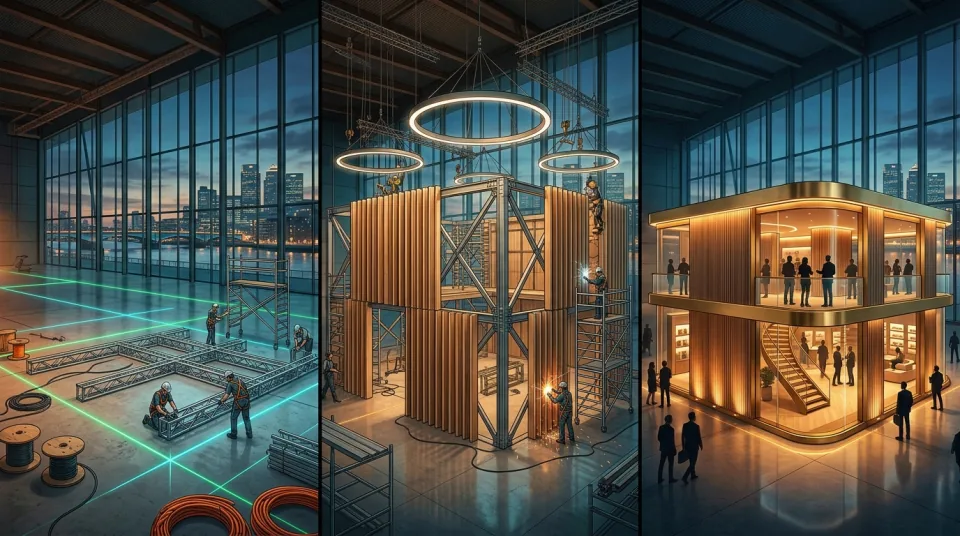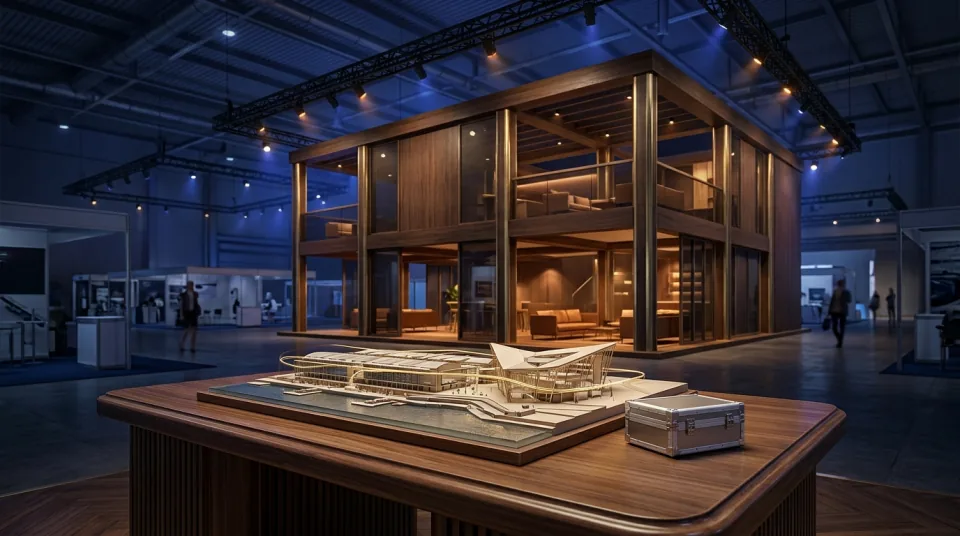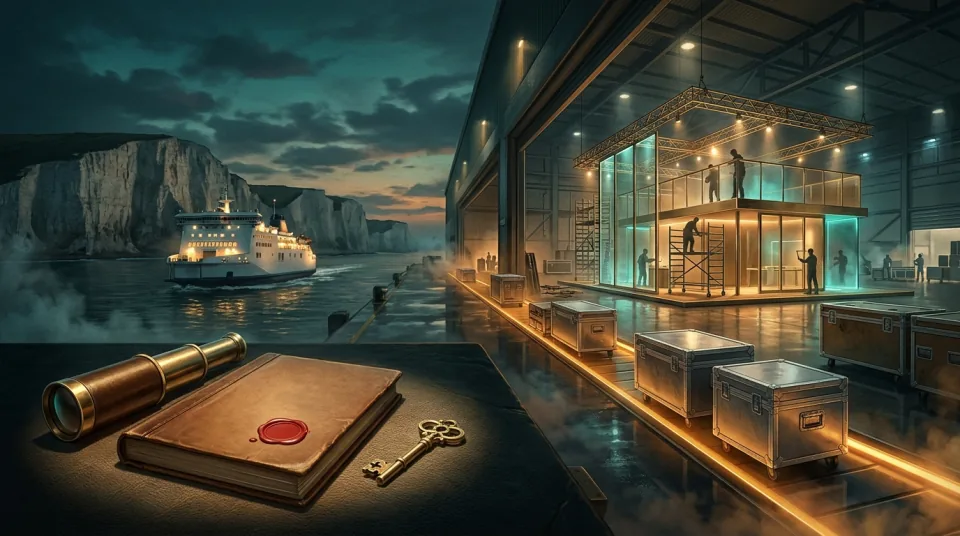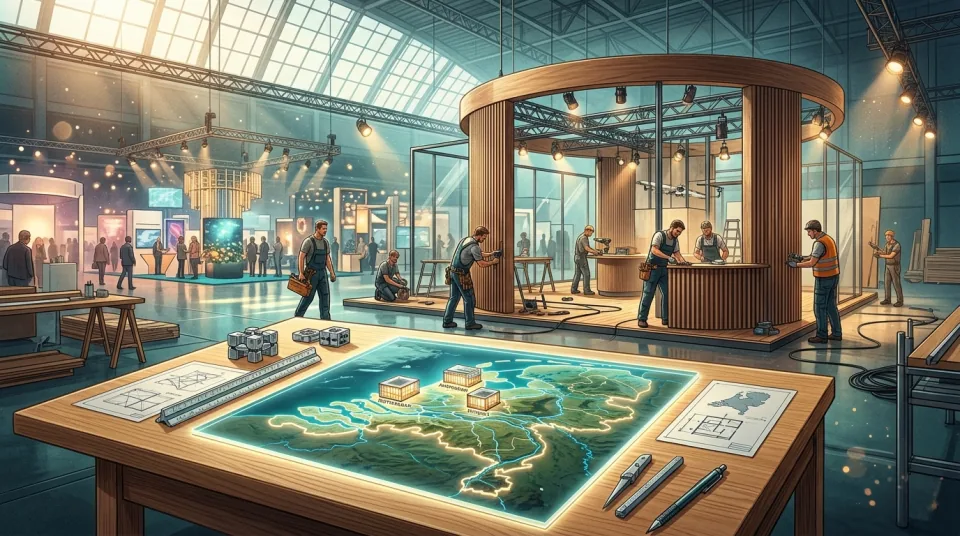
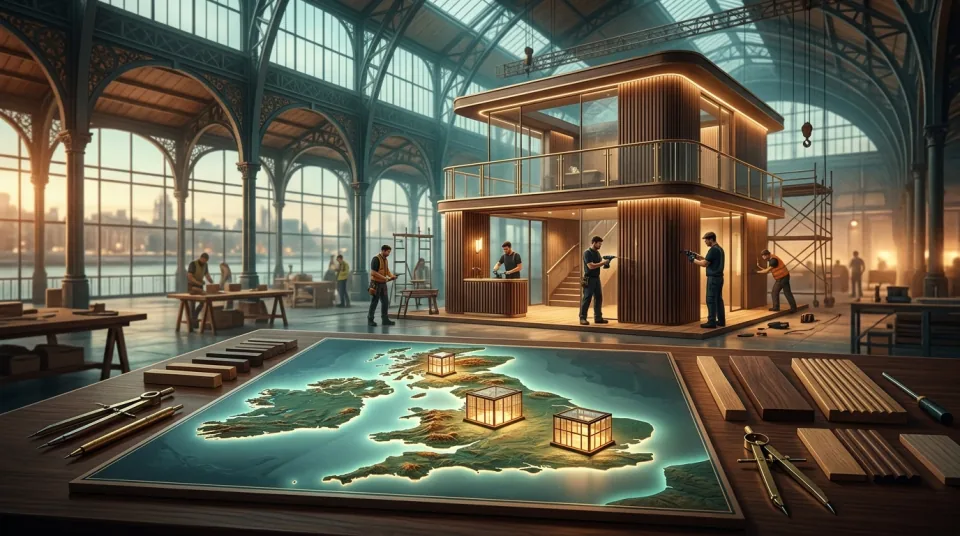
The UK exhibition stand-build market ranks as the third largest in Europe, with annual turnover of about £600-800 million and it centres around three major venue clusters. They are London (ExCeL, Olympia, Business Design Centre), Birmingham (NEC, the National Exhibition Centre) and Glasgow (SEC).
Operational complexity after Brexit has changed how UK exhibitors and builders do business and UK exhibitors have to add more ATA Carnet, A1/Certificate of Coverage and EU VAT recovery overhead for appearing at fairs in Europe. Cost arbitrage between UK and continental builders is now more level for UK-based builders.
Exhibition stand builder firms working across major UK venues appear in this guide and it covers the evaluation system specific to the UK market as well as the post-Brexit operational situation. It also shows where UK builders stack up competitively against German, Polish and other European options.
The UK exhibition stand builder market, structural overview
Three structural categories define the UK market:
| Category | Profile | Typical client |
|---|---|---|
| London-anchored international agencies | Top-tier creative shops with global delivery capability | Fortune 500, premium consumer brands, financial services |
| Birmingham/NEC-cluster specialists | Strong relationships with NEC venue services, dominant in national B2B fairs | Mid-market B2B exhibitors at Spring/Autumn Fair, Caravan & Motorhome Show |
| Glasgow/SEC and regional Scotland | Specialist Scottish industrial events plus offshore energy | Energy, offshore, North Sea industries |
The UK industry is represented by the AEO (Association of Event Organisers) and the ESSA (Event Supplier and Services Association). ESSA membership covers approximately 250 active stand-builder and supplier members across the UK and is the closest UK equivalent to Germany’s FAMAB. AEV (Association of Event Venues) covers UK venue operators.
Where to find builders by city
London, ExCeL, Olympia, Business Design Centre
Anticipate London / IFSEC (the security industry), World Travel Market, The Meetings Show, Bett UK, Surface Design Show, The London Build Expo, IFE (The International Food & Drink Event) and many more mid-sized B2B and consumer fairs all run in London. Major venues are ExCeL London (in the Royal Victoria Dock area), Olympia London (in Kensington with a 2027 redevelopment taking space to 50,000 sqm) and Business Design Centre (in Islington).
London has many builders among them Ambien® 360 Exhibition Stands Builders, Booth Exhibits, Expo Stand Services, We Make Studio (London Exhibition Stands), The London Display Company, STANDBUILDER.co.uk Ltd, Creation Exhibitions, Stands Pro Limited and the London branches of pan-UK builder networks. The full directory can be found at /cities/london.
Birmingham, NEC Birmingham
The NEC (National Exhibition Centre) in Solihull near Birmingham is the largest exhibition venue in the UK at 186,000 sqm of indoor space. It hosts Spring Fair (one of Europe’s largest gift and home fairs), Autumn Fair, The Skills Show, Caravan & Motorhome Show, Crufts dog show, MotorBike Live, plus dozens of mid-sized B2B fairs annually.
Regional specialists who dominate NEC-venue work via set up venue-services relationships make up the Birmingham builder cluster. Browse /cities/birmingham.
Glasgow, SEC Glasgow
The Scottish Event Campus (SEC) Glasgow hosts the SEC Centre, the SEC Armadillo (Clyde Auditorium), and the OVO Hydro arena. Major events include All-Energy (the UK’s largest renewable energy event), TCT 3Sixty Glasgow (advanced manufacturing and 3D printing), plus Scottish regional industrial fairs. Glasgow-based builders include Magic Modular, Redblu Graphics & Displays, Absolute Design & Build, Citrus Displays, Rocket Worldwide Exhibitions. Browse /cities/glasgow.
Manchester and regional UK
Mid-sized events go to Manchester Central and the Manchester area builders work for the wider North West market. Harrogate Convention Centre, Liverpool Exhibition Centre, BIC Bournemouth and ICC Wales are other venues around the region.
The post-Brexit operational context for UK builders
Brexit reshaped UK stand-build economics in three structural ways:
1. Cross-channel logistics overhead. Operating across channels now brings UK builders working on EU fairs (Hannover Messe, MWC Barcelona, IFA, Salone del Mobile) through ATA Carnet paperwork, posted-worker pre-notifications, 13th Directive-driven EU VAT recovery and CE marking for anything demoed. Each requirement adds 5 to 15 percentage points to the operational overhead of cross-channel projects.
See EU-UK TCA social security coordination for the comprehensive post-Brexit framework.
2. EU technical compliance partnership requirement. When UK builders send work to EU venues, they team up with locally qualified electricians (German Verantwortliche Elektrofachkraft, Italian Statiker and so on) for inspection sign-off. Major UK builders have set up these partnerships already. Smaller UK builders may fail to grasp how much compliance work that takes.
3. Reciprocal competitive pressure. EU builders now serve UK fairs more competitively since post-Brexit the UK is just another export market for them (not within the EU single market). The cost arbitrage that Polish and Eastern European builders bring to UK fairs is now structurally enabled, see Poland stand builders.
UK stand-build pricing 2026
Indicative ranges for UK builders at major UK venues:
| Stand profile | GBP per sqm | EUR equivalent |
|---|---|---|
| Modular rental, in-line 12-30 sqm | 290-540 | 340-625 |
| Modular hybrid, peninsular 50-100 sqm | 460-800 | 530-925 |
| Custom design, peninsular 50-100 sqm | 780-1,560 | 905-1,810 |
| Custom design, island 150-300 sqm | 1,200-2,380 | 1,395-2,765 |
| Custom flagship, 400+ sqm | 1,700-3,820 | 1,975-4,440 |
Pricing in the UK is most often 5 to 10 percentage points below that of Germany at equivalent specification. London inner-zone projects come with a 10 to 15 percentage point premium over Birmingham/NEC equivalents because of higher London labour costs.
How to evaluate a UK stand builder, the seven-check framework
Standard European stand-builder evaluation framework with UK-specific notes:
1. ESSA membership. Industry codes of conduct and quality standards are agreed to by ESSA members. It is not the only signal but it filters out the most casual operators.
2. Demonstrated experience at your specific UK venue. Operational knowledge at ExCeL differs from NEC and SEC. A builder that has worked on 20+ stands at your venue has tacit knowledge of how inspection works, how freight moves around, on-site labour relationships and security clearances.
3. BS 7671 electrical compliance capability. All UK fair-stand electrical installations conform to BS 7671 (the UK electrical wiring rules). A qualified UK electrician (City and Guilds 2382-22 / 2391 or equivalent) must sign the completion certificate. And UK builders working at EU venues need to have partnerships that are recognised by the EU as well.
4. Post-Brexit cross-channel capability. Where your fair calendar has EU venues, make sure the builder can handle the ATA Carnet and posted-worker rules for crew going to EU venues and works with EU-qualified electricians as well.
5. Sustainability documentation. More UK builders now have FSC chain of custody and ISO 9001/14001 certifications and supplier documentation programmes aligned to CSRD that come ahead of what clients will need by 2027. Large EU parent companies’ UK subsidiaries face CSRD flow-down.
6. Insurance. Public liability £5M minimum, product liability £10M minimum.
7. Three named UK exhibitor references. These should come from the past 18 months and be from venues comparable to what you are targeting.
Where UK builders compete strongly
Three exhibitor profiles where UK builders typically outperform alternatives:
1. UK-domestic fairs at ExCeL, NEC, Olympia. On-site labour networks and the operational rhythm that go into first-time-pass inspections and on-schedule delivery come from venue relationships held by UK-resident builders and on-site labour networks.
2. London creative-led activations. London creative agencies and design-led stand builders compete at the top end of the European market for brand-led consumer activations, particularly fashion and lifestyle.
3. Post-Brexit UK-only exhibitor profiles. By working solely with UK-domestic builders, UK exhibitors that only show at UK fairs get to avoid the full set of ATA Carnet, posted-worker and EU VAT complexity.
When alternative options may serve better
1. EU fair circuits. For UK exhibitors whose fair calendars are mainly EU based, working with builders based in the EU such as German, Polish and Italian companies is most often cheaper than getting UK builders to ship into the EU.
2. Premium continental craftsmanship. Top-tier flagship stands get an edge from Italian custom carpentry and German engineering precision and UK builders compete on commercial integration instead of absolute material craftsmanship for premium continental craftsmanship.
3. Cost-optimised European tours. Polish builders delivering across the European circuit at 25-40% below UK pricing remain the strongest cost arbitrage option, see Poland stand builders directory.
Where to start
If you are evaluating UK stand builders:
- Browse our vetted European builder directory filtered to UK cities
- Read post-Brexit UK exhibition customs for cross-channel operational context
- Read ExCeL London stand build operational guide for venue-specific detail
- Submit an RFQ for matched UK builder quotes, no obligation
Adapted to the post-Brexit operational reality, the UK exhibition stand market has changed. UK builders stay commercially competitive for UK-domestic exhibitor profiles and make world-class work at the creative-led top tier. When it comes to EU-fair circuit programmes, the standard procurement approach now is to evaluate UK builders against continental options (German, Polish, Italian) instead of treating that as the exception.
References
- ESSA (Event Supplier and Services Association), essa.uk.com
- AEO (Association of Event Organisers), aeo.org.uk
- AEV (Association of Event Venues), aev.org.uk
- BS 7671:2018+A2:2022 IET Wiring Regulations, UK electrical installation standard
- ExCeL London, excel.london
- NEC Group, necgroup.co.uk
- SEC Glasgow, sec.co.uk
- HM Government, “European Union (Future Relationship) Act 2020”, legislation.gov.uk/ukpga/2020/29
- London Chamber of Commerce ATA Carnet, londonchamber.co.uk/export-documents/ata-carnets
FAQFrequently asked questions
Indicative UK rates for 2026 run from 780 to 1,560 GBP per sqm for a custom peninsular stand of 50 to 100 sqm, and 1,200 to 2,380 GBP per sqm for a custom island of 150 to 300 sqm. Modular rental in-line stands of 12 to 30 sqm sit lower at 290 to 540 GBP per sqm, with custom flagship work from 1,700 to 3,820.
Yes. London inner-zone projects carry a 10 to 15 percent premium over Birmingham and NEC equivalents, reflecting higher London labour costs. That gap is on top of the general UK level, which itself tracks 5 to 10 percent below German equivalents at like-for-like specification, so venue choice inside the UK moves the budget before any design decision is made.
UK fair-stand electrical installations follow BS 7671, the UK electrical wiring regulations. The completion certificate must be signed by a qualified UK electrician holding City and Guilds 2382-22 or 2391 or an equivalent qualification. UK builders who also deliver at EU venues additionally need EU-recognised qualification partnerships, because a UK certificate alone does not satisfy continental inspection sign-off.
ESSA members agree to industry codes of conduct and quality benchmarks, which filters out the most casual operators, though it is not the only signal worth checking. ESSA, the Event Supplier and Services Association, covers approximately 250 active stand-builder and supplier members across the UK and is the closest UK equivalent to Germany’s FAMAB association.
UK builders delivering into EU fairs now navigate ATA Carnet documentation, posted-worker pre-notifications, EU VAT recovery via the 13th Directive, and CE marking for any demoed products. Each requirement adds 5 to 15 percent operational overhead to cross-channel projects. UK exhibitors also carry additional A1 or Certificate of Coverage paperwork for European fair appearances.
For cost-optimised European tours. Polish builders delivering across the European circuit price 25 to 40 percent below UK pricing and remain the strongest cost arbitrage option. Exhibitors with predominantly EU fair calendars also often find EU-based builders, German, Polish or Italian, more cost-effective than UK builders shipping into the EU from across the channel.
Public liability of 5 million GBP minimum and product liability of 10 million GBP minimum. Alongside insurance, ask for three named UK exhibitor references from the past 18 months at venues comparable to your target, and verify sustainability documentation such as FSC chain of custody and ISO 9001 or 14001 certification where your brief calls for it.
ExCeL operational knowledge differs from the NEC, which differs again from the SEC. A builder with 20 or more stands at your venue has tacit knowledge of inspection patterns, freight logistics, on-site labour relationships and security clearances. That is what translates into first-time-pass inspections and on-schedule delivery at UK-domestic fairs.
The NEC, the National Exhibition Centre in Solihull near Birmingham, is the largest exhibition venue in the UK at 186,000 sqm of indoor space. It hosts Spring Fair, one of Europe’s largest gift and home fairs, plus Autumn Fair, The Skills Show, the Caravan and Motorhome Show, Crufts, MotorBike Live and dozens of mid-sized B2B fairs annually.
Not usually. UK exhibitors who only exhibit at UK fairs avoid the ATA Carnet, posted-worker and EU VAT complexity entirely by working exclusively with UK-domestic builders, who also carry the venue relationships and on-site labour networks. Comparing UK against German, Polish or Italian builders becomes standard procurement discipline once an EU fair enters the calendar.