European stand-builder directory
Storage between shows is where a modular stand reused across four fairs a year spends 96 percent of its life, and the economics of that warehouse decide whether the stand survives ten cycles or three. This section covers EUR-per-cubic-metre tariffs across Germany, the Netherlands, and Italy, the climate-control case for LED and AV assets, asset-tracking systems that prevent the year-three component drift, and the contractual gotchas (minimum volume, ADSp liability caps, exit clauses) that turn an apparently competitive warehouse quote into a budget surprise.
This section covers storage between shows for European exhibitors. Exhibition stand storage looks like a commodity until something goes wrong. Standard warehousing in Germany costs EUR 8-14 per cubic metre per month, almost a rounding error against the build budget, yet the difference between a competent and a careless warehouse decides whether your modular skeleton makes it to ten reuses or whether year-three storage damage forces a costly refurbish. Climate control matters more than most exhibitors recognise: LED driver boards corrode within 6-9 months at 70%+ humidity, fabric SEG tension loosens unpredictably, and MDF panel edges swell every German winter. EUR 16-26 per cubic metre per month buys conditioned storage that protects the components that actually wear out in a non-conditioned environment.
The articles in this section unpack the storage decision in detail.
We cover the tariff structures of Schenker, Kuehne+Nagel, Cretschmar Cargo, and Hofmann Express, the case for two-tier storage (bulk structural elements in standard space, sensitive electronics in a smaller conditioned bay), and the asset-tracking systems that prevent the slow drift where 15-25% of stored components become unidentifiable by year three.
We also examine the geographic question, store near Frankfurt or near your office, and the contractual gotchas in German warehouse agreements including the ADSp EUR 8-12 per kg liability cap, minimum cubic-metre commitments, and the 60-90 day notice clauses that delay clean exits. The goal is a storage strategy that quietly protects your asset value for the entire reuse lifecycle.
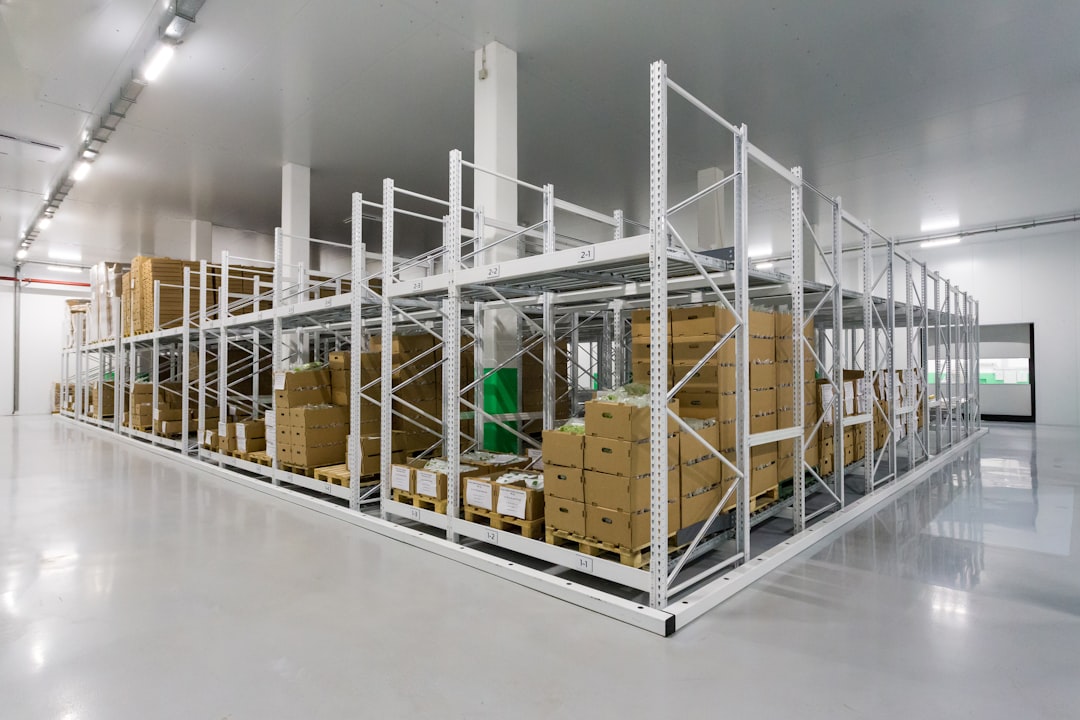
For exhibitors running three or more fairs per year on the same modular skeleton, the storage decision determines whether the stand spends 9 months of the year accumulating warehousing fees or working efficiently. The warehouse network, the cost ranges, and the climate-control disciplines that protect a multi-fair investment.
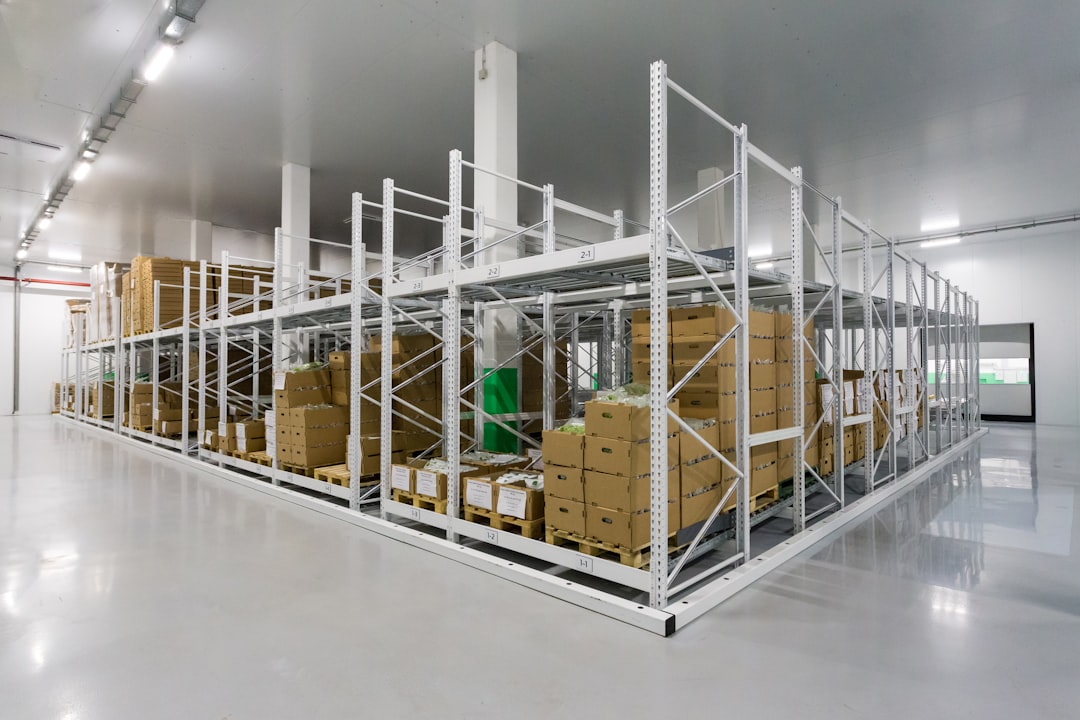
A pan-European fair calendar of four to six shows per year is operationally a logistics engineering problem before it is a marketing decision. The stand-rotation strategy, the storage routing between consecutive fairs, the forwarder relationships, and the buffer planning all interact. A complete strategic guide to running a multi-fair European calendar profitably, with the routing patterns experienced exhibitors use to control cost.
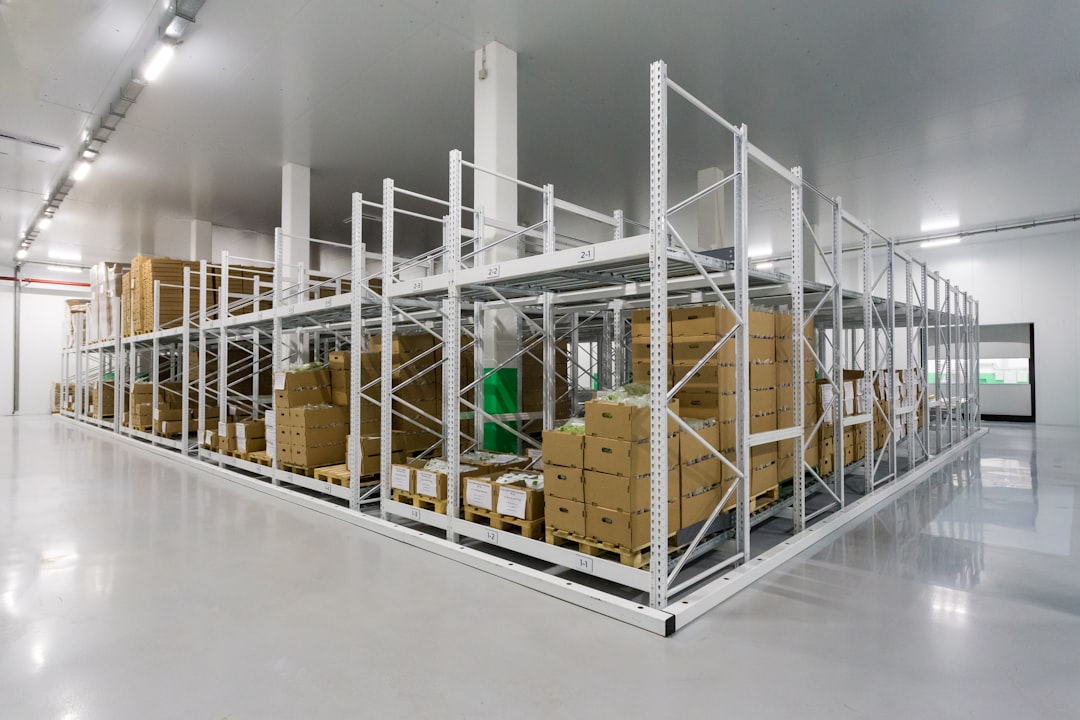
Stand storage between fairs is the invisible cost line that determines whether a multi-fair European calendar runs profitably or hemorrhages money on transport. A comparison of bonded warehousing, climate-controlled storage, and venue-adjacent options across the major European exhibition hubs, with 2026 EUR rates and the operational considerations that determine which type fits which exhibitor profile.
Standard exhibition warehousing in Germany runs EUR 8-14 per cubic metre per month for non-climate-controlled storage, rising to EUR 16-26 per cubic metre per month for climate-controlled space suitable for LED screens, AV equipment, and bespoke joinery.
A typical 80 sqm modular stand fits in 14-22 cubic metres in flight cases, so annual storage between two shows runs EUR 1,400-3,400 unconditioned or EUR 2,700-5,500 conditioned. Schenker, Kuehne+Nagel, and specialist exhibition storage operators like Cretschmar Cargo and Hofmann Express all offer EUR-per-cubic-metre rates with handling-in and handling-out charges of EUR 25-45 per crate movement.
Dutch and Belgian warehousing tends to be 10-15% cheaper for equivalent specification.
Aluminium frame extrusions, MDF panels, and printed fabric SEG graphics survive standard warehousing without obvious damage for short periods, but humidity swings during a German or Italian winter cause cumulative degradation: fabric tension loosens, MDF panel edges swell, and adhesive-mounted graphics delaminate.
LED display panels, AV controllers, motorised elements, and lithium-battery-powered devices genuinely need climate control, humidity above 70% can corrode LED driver boards within 6-9 months. The practical compromise most exhibitors run is a two-tier warehouse contract: bulk structural elements in standard storage, sensitive electronics and graphics in a smaller conditioned bay.
The premium for the second tier is well worth it; replacing an LED wall corroded in storage costs more than ten years of conditioned warehousing.
Asset tracking matters more than most exhibitors realise. A 100 sqm modular stand can carry 200+ unique components, frames, panels, graphics, lighting fixtures, AV units, hospitality furniture, branded merchandise stock. Without an inventory system, year-three storage typically contains 15-25% of components that nobody can identify the use of.
The minimum viable system is a barcoded inventory tied to the flight cases, scanned in and out at warehouse handovers and reconciled against a per-show kit list. More mature operators use RFID at case level.
Schenker's exhibition desk and Cretschmar both offer asset management as an add-on; expect EUR 180-450 per month for a managed inventory of 200-500 items, which usually pays back inside two shows by eliminating duplicate replacement orders.
For exhibitors running a recurring fair calendar across Western Europe, storing near Frankfurt or Düsseldorf almost always wins. Those cities sit within 4 hours' truck of every major Western European Messe (Düsseldorf, Frankfurt, Köln, Hannover, Stuttgart, München, Berlin, Amsterdam, Brussels, Paris) and inside 8 hours of Milan and Barcelona.
The freight saving on running stand assets out from a Frankfurt warehouse rather than from Manchester, Madrid, or Stockholm typically exceeds the EUR 200-400 monthly premium for German warehouse rates over peripheral European locations. UK-based exhibitors increasingly base assets in Rotterdam or Antwerp post-Brexit to avoid running customs paperwork on every cross-Channel movement.
Match warehouse location to your fair calendar geography, not your headquarters.
Three contractual issues catch exhibitors out. First, minimum monthly volume: most warehouses bill on declared cubic metres regardless of actual stored volume, so a contract written for 30 cubic metres charges 30 even when only 18 are in store post-show. Second, insurance: standard warehouse liability is capped at EUR 8-12 per kg under the German Spediteurbedingungen (ADSp), wholly inadequate for high-value AV.
Always buy supplementary all-risk warehouse cover at 0.15-0.3% of declared asset value annually. Third, the contract end clause: many warehouses require 60-90 days written notice and impose a final-handling charge equivalent to one month's storage on departure. Read the termination terms before signing; an apparently competitive monthly rate can mask an expensive exit.
AUMA publishes a model storage contract template German exhibitors use as a baseline.
